• Skip to primary navigation
  • Skip to main content
  • Skip to primary sidebar
  • Skip to footer
RevUp Dental

RevUp Dental

Drive More Patients To Your Practice With Our Patients Generating Dental Platform.

  • Solutions
    • Dental Website DesignBook more patients with our dental websites.
    • Google Ads for DentistsGet more new patients with google ads campaigns for dentists.
    • Dental SEOData-driven dental SEO that brings new patients.
    • Dental Staff TrainingTake your customer service and booking success to the next level.
    • ScorecardRun a smarter, more profitable dental practice.
  • Resources
    • Dental Marketing LibraryExplore our collection of articles focused on the latest trends and best practices in dental marketing.
    • Free eBooksOur free, comprehensive guides for in-depth knowledge and practical strategies to get more patients.
    • Video HubWatch our video tutorials designed to enhance your dental marketing strategies and skills.
    • WebinarsParticipate in our webinars for hands-on training and live feedback.
    • Dental Staff TrainingTake your customer service and booking success to the next level.
  • Testimonials
  • About
  • Login

Marketing

Test

Adrian Clocusneanu Filed Under: Marketing October 7, 2025

Table of Contents

  • Why should your branded search be your marketing priority?

Test

  • Adrian Clocusneanu
    Updated October 29, 2025 03:59 pm

Lorem ipsum dolor sit amet, consectetur adipiscing elit, sed do eiusmod tempor incididunt ut labore et dolore magna aliqua. Ut enim ad minim veniam, quis nostrud exercitation ullamco laboris nisi ut aliquip ex ea commodo consequat. Duis aute irure dolor in reprehenderit in voluptate velit esse cillum dolore eu fugiat nulla pariatur. Excepteur sint occaecat cupidatat non proident, sunt in culpa qui officia deserunt mollit anim id est laborum.
Lorem ipsum dolor sit amet, consectetur adipiscing elit, sed do eiusmod tempor incididunt ut labore et dolore magna aliqua. Ut enim ad minim veniam, quis nostrud exercitation ullamco laboris nisi ut aliquip ex ea commodo consequat.

Lorem ipsum dolor sit amet, consectetur adipiscing elit, sed do eiusmod tempor incididunt ut labore et dolore magna aliqua. Ut enim ad minim veniam, quis nostrud exercitation ullamco laboris nisi ut aliquip ex ea commodo consequat. Duis aute irure dolor in reprehenderit in voluptate velit esse cillum dolore eu fugiat nulla pariatur. Excepteur sint occaecat cupidatat non proident, sunt in culpa qui officia deserunt mollit anim id est laborum.

Why should your branded search be your marketing priority?

Lorem ipsum dolor sit amet, consectetur adipiscing elit, sed do eiusmod tempor incididunt ut labore et dolore magna aliqua. Ut enim ad minim veniam, quis nostrud exercitation ullamco laboris nisi ut aliquip ex ea commodo consequat. Duis aute irure dolor in reprehenderit in voluptate velit esse cillum dolore eu fugiat nulla pariatur. Excepteur sint occaecat cupidatat non proident, sunt in culpa qui officia deserunt mollit anim id est laborum.

Conclusion

Lorem ipsum dolor sit amet, consectetur adipiscing elit, sed do eiusmod tempor incididunt ut labore et dolore magna aliqua. Ut enim ad minim veniam, quis nostrud exercitation ullamco laboris nisi ut aliquip ex ea commodo consequat. Duis aute irure dolor in reprehenderit in voluptate velit esse cillum dolore eu fugiat nulla pariatur. Excepteur sint occaecat cupidatat non proident, sunt in culpa qui officia deserunt mollit anim id est laborum.

Ellipse 5
Free eBooks
2025 Social Media Strategies
The Power Of Discovery Questions Ebook
The Power Of Discovery Questions

Related Articles

The #1 Way to Get More Dental Patients

revupmanager Filed Under: Marketing August 17, 2025

The #1 Way to Get More Dental Patients

What if you could ask the top dental practices in North America one simple question:

“How do you consistently get more new patients for your practice?”

And what if they gave you the straight answer, no fluff, no vague advice. Well, we actually can give you that answer.

At RevUp Dental, we work with hundreds of practices across North America, including some of the very best. Our Scorecard software gives us access to real performance data so we know exactly what the top 10% of practices do to fill their schedules.

And here’s the surprising truth: it’s not what most dentists think:

  • It’s not huge marketing budgets.
  • It’s not flashy websites.
  • It’s not AI agents.
  • It’s not some magic pill solution.

The secret is much simpler:

They have an exceptional front desk team that’s trained to convert calls into appointments and make every patient feel like a priority from the very first “hello.”

The Biggest Factor in Booking New Patients

For many dental practices, the biggest growth barrier isn’t marketing, it’s the way staff handle patient interactions, especially over the phone. Marketing can bring in leads, but the quality of your team’s conversations with potential patients often makes or breaks whether they book an appointment.

Think of it like baseball: marketing is like pitching balls toward your dental practice. Your staff’s job is to hit them and score. You could get just a few balls, but if your team is great at hitting them, you’ll still score big.

On the other hand, you could have dozens of balls coming your way, but if your team keeps missing, you’re losing.

Why Many Dental Offices Lose Patients

Most dental receptionists and office staff are not trained in sales. They may be friendly and courteous, but without proper skills in handling patient inquiries, they can easily miss opportunities to convert a lead into a booked appointment.

Think about it this way: you probably know how to drive a car but that doesn’t make you a race car driver.

The front desk staff at a $2M+ dental practice are the equivalent of top-level race drivers. They know how to handle every turn, shift, and challenge at high speed.

Can you make your front desk operate at that level? Yes, but it takes a lot of training, a natural gift for patient communication, and the right personality type. It’s not something most people achieve overnight.

But here’s the good news: you don’t need your staff to be perfect to see massive results. The easiest, low-hanging fruit is simply making your team a little bit better than they are today. Even modest improvements in how they answer calls, build rapport, and guide patients to book can have a huge impact on your production.

Here’s what the data from hundreds of practices we work with shows: the average dental receptionist books only about 33% of new patient calls. That means if 10 potential patients call your office, only 3 end up booking an appointment.

The top receptionists in the industry? They book 80–85% of those calls.

Now, here’s the good part: you don’t have to hit 85% to transform your practice. If your staff goes from 33% to just 60%, that’s almost double the number of new patients walking through your door.

Without spending a single extra dollar on marketing you could have twice as many new patients sitting in your chair next month.

The Biggest Bottleneck Staff's Sales Skills Cover

When your booking rate isn’t where you want it to be, it’s tempting to blame the callers.
“They were just price shopping.”
“They weren’t serious.”
“They weren’t a good fit.”

But the truth is, that’s not always the case.

Most patients aren’t calling to compare prices — especially since dental fees tend to be similar across practices. What they are doing is evaluating the experience.

In the first few seconds, they’re deciding:

  • Do I feel like my dental care will matter here?
  • Do I trust this person to help me?
  • Do I feel welcomed and understood?

If the answer to those questions is “no” or even “I’m not sure,” they’ll hang up and call the next practice — even if the cost is exactly the same.

We’ve seen countless patients choose a competitor not because of money, location, or availability, but because they simply felt more comfortable with the person who answered the phone.

The first impression your team makes is everything. If your receptionist sounds rushed, distracted, or uninterested, the patient is gone. But if they make the caller feel like a priority, listen actively, and engage with genuine empathy, your chances of booking them skyrocket.

Here’s the good news: these skills can be trained. With the right phone-handling techniques, your team can turn more calls into booked appointments — and keep those high-value patients from choosing someone else.

Why Patients Choose Other Practices Cover

Tracking Your Booking Rate Matters

When we talk to dentists about improving their booking rates, we often hear some version of this:

“Oh, my staff is amazing! If we got 10 new patient calls this week, they’d book at least 8 or 9 of them.”

Sounds great, right? The problem is… most practices have no data to back that up. They don’t track their call-to-booking conversion rates, so they don’t actually know:

  • How many calls were answered
  • How many turned into appointments
  • Why the ones that didn’t book were lost

When we ask how they know their staff is performing so well, we often hear:

“Well, I’ve worked with these people for years. They’re fantastic!”

And maybe they are. But here’s the reality: without tracking and reviewing calls, you’re going on gut feeling, not facts. And in our experience, those gut feelings are almost always overly optimistic.

In fact, once we start tracking, even practices that swear they’re booking “most” of their calls are often surprised (and a little shocked) to find they’re closer to 30–35%.

Easy Ways Your Front Desk Can Book More New Patients

If you’re looking for how to get more dental patients, improving how your staff handles new patient calls can transform patient flow.

Here are a few simple but effective strategies to consider:

Ask Open-Ended Questions

Encourage your front desk team to go beyond yes/no questions. Instead, use prompts that invite patients to share more about their needs:

  • “What brings you in today?”
  • “How can we make your visit as comfortable as possible?”

This not only creates a more positive patient experience but also gives your team the information they need to respond personally and connect with both new and existing patients.

Take Charge of the Conversation

Your front desk should confidently guide the call toward booking an appointment. After answering questions, they might say:

“We’d love to help you get started. Let’s schedule a consultation.”

This clear direction reassures the caller and helps turn more inquiries into scheduled visits, growing your patient base without increasing your marketing spend.

End on a Positive Note

Finish each call with warmth and enthusiasm:

  • “We’re excited to take care of you!”
  • “We’re here if you have any other questions.”

Ending on a friendly note leaves a strong final impression, increasing the likelihood that a new patient will choose your practice — and that current patients will refer others. When your team consistently delivers this kind of positive patient experience, you’ll not only attract new patients but also strengthen relationships with your existing ones, leading to long-term growth for your practice.

How to Improve Patient Interactions Cover

Tools to Help Your Dental Practice Grow

Alongside training, technology can play a big role in how to get more dental patients by tracking and following up on calls. Here’s how simple tools can help:

Track Your Calls

Call-tracking software gives you a clear picture of how calls are being handled. You can see:

  • How many calls turn into booked appointments
  • Which questions cause hesitation or lost opportunities
  • Patterns in staff performance over time

With this data, you can coach your team to answer confidently, overcome objections, and avoid missed opportunities.

One of our clients even listens to call recordings in their spare time  and finds it incredibly helpful for improving conversion rates.

Example tools: CallRail | CallTrackingMetrics

Automate Follow-Ups

Not every patient books right away, but that doesn’t mean the lead is lost. Automated follow-up systems can send reminders, check-ins, or helpful information to keep the conversation going. Often, this extra touch turns a “maybe” into a “yes,” without spending more on marketing strategies.

Example tools: Podium | Weave 

Get More Google Reviews

Google reviews are one of the most powerful ways to attract new patients to your dental clinic. When prospective patients search for a new dentist, they often choose the practice with the highest rating and the most recent positive feedback.

A strong Google review profile:

  • Builds trust with potential patients before they call
  • Improves your visibility in local search results
  • Helps you stand out from other dental practices in your area

Example Tools: Swell | Birdeye

Encourage Patient Reviews and Referrals Cover

What Top Practices Are Doing Differently

After working with hundreds of dental offices across North America and reviewing thousands of patient calls, we’ve noticed something consistent: the best-performing practices follow a clear, repeatable pattern on every new patient call.

They don’t just answer questions — they guide the conversation in a way that makes the patient feel heard, understood, and confident about booking.

1. They Start With a Warm, Professional Greeting
“Thank you for calling [Practice Name], my name is Sarah. How can I help you today?”
This instantly sets a friendly, confident tone and signals professionalism.

2. They Use Discovery Questions to Build Rapport and Gather Information
Instead of jumping straight to scheduling, they ask thoughtful questions to understand the patient’s situation:

  • “When was the last time you visited a dentist?”

  • “Are you in pain right now?”

  • “Have you researched dental implants before calling us?”

These questions uncover needs, address urgency, and show genuine interest.

3. They Transition to Taking Control of the Call
Once they’ve listened, top receptionists naturally guide the conversation:

“I can definitely assist you with that. Would you mind if I ask you a couple of questions to better understand your situation?”

This smoothly shifts the focus from casual conversation to structured next steps.

4. They Reassure and Reduce Anxiety
If the caller sounds hesitant, they provide reassurance:

  • “You’ll be in great hands — our patients love how gentle Dr. Smith is.”

  • “Most people are surprised by how quick and comfortable the process is.”

5. They End With a Positive, Confident Confirmation

“We’re looking forward to seeing you on Tuesday at 10 AM. You’re going to love our team!”

These aren’t random phrases — they’re intentional communication techniques that top practices use to consistently convert calls into booked appointments.

At RevUp Dental, we’ve spent years studying what makes these offices so successful. We’ve distilled those lessons into a free guide you can use to train your own dental team.

This isn’t about pushy, outdated sales tactics, it’s about modern, patient-focused communication techniques that work in today’s competitive dental market.

The guide dives deep into one of the most important skills in patient communication: asking effective discovery questions. These questions build trust, uncover patient needs, and position your practice as the best choice for their care.

By adopting the same approach top practices use, you can take control of every new patient call, create an exceptional first impression, and keep more leads from slipping through the cracks.

The Easiest Way to Get More New Patients

If you’re serious about getting more new patients, you don’t have to start with expensive ads or a new website. The fastest and most cost-effective way to grow is by improving how your front desk handles new patient calls.

But here’s the reality: most dentists don’t have the time or energy to personally train their staff, and even if they do, the results often don’t stick. Maybe you’ve given your team a guide before, only to see them go right back to their old habits a week later.

That’s exactly why we created our Maximize New Patient Bookings Course. We don’t just teach your team what to do, we:

  • Train them using proven call-handling and conversion techniques

  • Monitor their real calls after the training to ensure skills are being applied

  • Provide feedback and ongoing coaching so the improvement lasts

It’s the shortcut to turning more calls into booked appointments without adding another task to your already full plate. If you want a higher booking rate, more new patients, and a smoother front desk operation without having to manage the training yourself, our course can do it for you.

Looking To Train Your Dental Staff?

If you’re serious about getting more dental patients, don’t wait until you’ve spent hundreds of dollars on marketing. Start by improving the way your staff handles phone calls. With the right training and strategies, you can dramatically increase your conversion rate, fill your schedule, and grow your practice without spending extra on marketing.

Learn More

From 9 to 90 Patients: Staff Training vs. Dental Marketing

revupmanager Filed Under: Marketing, Staff Training July 25, 2025

From 9 to 90 Patients: Staff Training vs. Dental Marketing

Key Takeaways:

  • Dental marketing can bring in calls, but consistent training turns those calls into patients.
  • Staff training leads to more predictable patient bookings, even without a massive dental marketing budget.
  • A dental marketing-only strategy can result in inconsistent results, with high fluctuations in booking rates.

As a dentist, it doesn’t take long to realize that growing your practice means getting more patients. You see your competitors ranking higher on Google, running ads, and pulling in more new patients. So, you think to yourself, “I need to do the same thing to stay ahead.”

You invest in dental marketing—Google Ads, Dental SEO, and whatever else promises to bring in more patients. The logic is simple: “If I just throw more money at marketing, I’ll get the patients I need.”

But is this really the best approach? Is more money thrown at marketing the key to dominating your local area? Is it really all about spending more, like every other dentist out there?

For example, one of our clients, Practice A, thought so. They invested heavily in dental marketing, hoping it would bring the success they were looking for. 

On the other hand, Practice B also recognized the need for marketing, but instead of dumping all their money into it, they decided to take a different route. They decided to spend less on marketing and focus more on training their front desk team.

In this article, we will explore how things panned out for both practices over the course of a couple of years. 

Practice A: The Dental Marketing-Only Approach

Imagine Practice A—a busy dental office with an established reputation. The team had years of experience, the office was well-equipped, and the dentist was skilled and knowledgeable. However, despite all these strengths, the practice was struggling to fill its schedule. There were gaps in the calendar, and even though the phone was ringing, it wasn’t bringing in enough new patients to keep the practice growing.

Practice A was confident that the issue wasn’t internal—it had to be external. Their belief? The marketing needed more attention.

“We just need a better website, more Google Ads, a bigger budget,” they said. “We’ve got everything else covered. Just fix the marketing, and the patients will come.”

So, they turned to RevUp Dental for help with their digital marketing strategy. We revamped their website, enhanced their SEO, and launched a more aggressive Google Ads campaign. With time, the results started coming in. The practice began receiving more leads, more phone calls, and more appointment requests. It seemed like the marketing was working. Leads were flowing in, and the team was finally seeing results—sort of.

However, as the months passed, we noticed something that was hard to ignore: while the number of leads increased, the booking rate fluctuated wildly. Some months, the practice would convert 70% of the calls into appointments, but the next month that number would plummet to 10%. There was no consistency, and the practice wasn’t reaching its potential.

They were getting more calls, but they weren’t converting those calls into patients at a steady rate. The team had good intentions, but the lack of structured training and accountability meant that their success was completely unpredictable. Some days were great, but most days, their scheduling was still full of gaps.

As Harvard Business Review points out, without accountability and reinforcement, most training programs fail to produce lasting change.

Practice B: The Training-Focused Approach

In contrast, Practice B took a different path. They too recognized the importance of marketing and knew that investing in it was essential. However, instead of throwing all their resources into an extensive Google Ads campaign or SEO push, they made a strategic decision: they would focus on training their team.

Practice B didn’t have the same marketing budget as some of their competitors, but they did have an open mind and a willingness to improve. They realized that without a well-trained team handling the incoming calls effectively, their marketing efforts would be less impactful. Dentistry Today emphasizes that front desk team training plays a critical role in converting inquiries into loyal patients.

They reached out to us not just for help with marketing, but with a focus on improving their call-handling processes. Together, we created a customized training program that equipped their front desk staff with the tools and skills to confidently convert leads into loyal patients. We worked with them to ensure their staff were asking the right questions, making patients feel heard, and ultimately guiding them to schedule appointments.

The change didn’t happen overnight, but after just a few months, the impact was clear. Practice B began to see more consistent booking rates, with the team converting calls into appointments at a steady rate. Their focus on internal improvement paid off, and within a year, their patient bookings had increased significantly.

The Results: A Tale of Two Practices

So, how did the two practices compare over time? Let’s take a look at the numbers.

Practice A: The Dental Marketing-Only Approach

  • Marketing Spend: Over $110,000 invested in marketing over 4.5 years.
  • Patients: More patients came in thanks to the SEO, Google Ads, and website improvements.
  • Booking Rate: Highly inconsistent—ranging from 10% to 70% month-to-month.
  • Conclusion: Despite a substantial investment in marketing, Practice A’s inconsistent booking rate meant they couldn’t rely on those leads to fill their schedule. Their team lacked structured training, leading to unpredictable results.

Practice B: The Staff Training-Focused Approach

  • Marketing Spend: Around $78,000 spent over 2 years—less than Practice A.
  • Patients: Steady patient flow, but with a bigger emphasis on booking them.
  • Booking Rate: Consistently around 65-70%, with minimal fluctuation.
  • Conclusion: Practice B’s approach of combining marketing with staff training resulted in steady, consistent growth. They didn’t spend as much on marketing, but their focus on improving how their team handled calls allowed them to book more patients at a more predictable rate.

What We Learned from These Two Practices

1. Dental Marketing is Important, But It’s Not Enough

While marketing can drive more leads to your practice, it’s how your team handles those leads that determines if they become patients. No amount of SEO or Google Ads will replace the value of a well-trained team. As Forbes highlights, exceptional customer experience now drives more influence than traditional marketing—especially during initial interactions.

2. Consistency is Key

Practice B’s success came from consistent call handling. Their booking rates stayed steady month after month because their team knew how to convert patients effectively. In contrast, Practice A’s fluctuating results showed that marketing alone couldn’t guarantee consistent patient flow.

3. Training Your Team Pays Off

Investing in team training can yield a better return than simply spending more on ads. Practice B showed that with less marketing spend, a focus on training staff to handle calls better resulted in far better outcomes.

4. Accountability Drives Improvement

Setting up systems to track and measure your team’s performance, and holding them accountable for how they handle calls, leads to sustained success. Practice B’s ability to track their team’s call-handling skills and improve them led to long-term growth.

Conclusion

The stories of Practice A and Practice B prove that while marketing is a crucial element in growing your practice, it’s not the only piece of the puzzle. Practice A spent more on marketing, but without a solid internal team to convert those leads into appointments, their efforts didn’t bring the results they wanted.

Practice B, on the other hand, invested in both marketing and staff training. While they spent less on ads, their commitment to improving how their team interacted with patients resulted in steadier growth and better patient bookings.

The takeaway? Don’t just focus on marketing—invest in training your team, improve your call-handling processes, and watch your results become more predictable and sustainable.

If you’re ready to see how RevUp Dental’s combined approach of marketing and training can work for you, contact us today. We’ll help you optimize both your marketing and your team to achieve consistent growth.

AI Dental Receptionists – The Latest Grift

RevUp Dental Filed Under: Marketing, Operations April 4, 2025

AI Dental Receptionists – The Latest Grift

Dental AI receptionists are everywhere right now. If you’re a dentist, I can almost guarantee that you’ve been hit up by multiple companies through email, phone calls, or ads, pitching their “revolutionary” AI receptionist that’s supposedly going to change your practice forever.

And it’s not just dentistry. AI phone agents are the hot new thing in every industry right now. A million companies have popped up in the last year offering some version of this tech, and they’re all scrambling to convince you that it’s the future. If you’ve ever taken a demo of one of these systems, you probably had the same first reaction that a lot of dentists do:

“Wow, this thing is pretty good and actually sounds like a real person.”

It responds quickly. It seems knowledgeable and professional. It doesn’t get flustered. You can interrupt it mid-sentence, and it still keeps up. And at first glance, it might even seem like it does a better job than a human receptionist. Plus, it works 24/7 and costs way less than a salary. What’s not to love?

A lot of dentists get excited and jump on board, thinking they’re getting in on the ground floor of some huge industry shift. Sure, there are some bugs here and there, but the company assures them it’s just part of the setup process—nothing they can’t fine-tune with a little tweaking.

They're Terrible In Practice

A few months go by, and that initial excitement starts to wear off. Instead of transforming the front desk, the AI starts to feel more like a hassle. You start seeing posts pop up on Dental Town like THIS, essentially saying:

“At first, I was impressed. There were some minor issues, but I figured it just needed time to improve. The company was responsive and promised updates. But after a few months… yeah, this isn’t working. I told my office manager to scrap it and go back to the old-school answering machine.”

AIReceptonst

Or like THIS, where the gist of it is:

“Same experience here. At first, I thought it had potential, but patients HATED it. They got frustrated having to repeat their names and birthdates over and over. The AI just didn’t understand them well enough. Honestly, the tech just isn’t there yet. Buyer beware.”

AIReceptonst2

And these stories? They’re everywhere.

Dentists who try these AI receptionists usually end up disappointed once the honeymoon phase is over. I want to break exactly why these systems seem so impressive at first—but end up being more trouble than they’re worth.

The AI Receptionist Gold Rush

So what’s actually wrong with these AI receptionists?

First off, they’re ridiculously easy to build. That’s why you’re seeing so many of these companies pop up overnight. In reality, they’re all using the same white-label software under the hood. They slap on their logo, tweak a few settings, and start selling it to dentists for hundreds of dollars a month—even though it only costs them $10–$20 a month to run.

The reason so many companies are jumping on this bandwagon isn’t because they’re passionate about AI or improving your practice. It’s because it’s a ridiculously profitable business. Most dentists will stick with an AI receptionist for at least three to six months or more to give it a fair shot, hoping it’ll get better. That’s plenty of time for these companies to make their money—even if the dentists eventually get frustrated and leave.

I actually made two videos showing just how easy it is to create one of these AI receptionists. In the first video, I spent five minutes writing out basic instructions, and the AI would probably impress most dentists and feel like it’s a high-tech solution.

In the second video, I spent 15 minutes tweaking it to handle follow-up calls and appointment confirmations. That’s it, no coding experience required.

And here’s the kicker—my coding knowledge is very basic. We employ a lot of talented developers at RevUp Dental, some with PHDs in machine learning from top universities… but my skill level is about a quarter of what an entry-level college student could do. And yet, in 20 minutes, I had a functional and pretty impressive AI receptionist built.

These AI receptionist companies want you to think they’re building some groundbreaking technology. They’re not. Most of them are just cobbling together the same off-the-shelf tools, charging a premium for it, and calling it innovation.

Why These Systems Always Disappoint

Dentists who sign up for AI receptionists often start out excited—but within a few months, they realize the system isn’t improving, and they quit. And it’s not because the AI “needs more time to learn.”

The real issue? These companies didn’t actually build the tech—they’re just reselling it. They’re taking off-the-shelf AI tools, slapping their logo on them, and charging dentists a premium. Since they don’t own or control the core technology, they have no real way to fix the problems.

At their core, these AI receptionists are just two basic systems glued together. A language model like ChatGPT that generates text-based responses, and a voice model like Eleven Labs that converts that text into speech. As I showed in my videos, tools like Retell AI make it incredibly easy for anyone—even without coding knowledge—to build one of these systems. And that’s exactly what most of these companies are doing.

Why is that? AI models like ChatGPT have a limited context window.

Think of it like a computer with limited RAM. The more information you feed it, the slower it gets. Once it runs out of memory, it starts to forget earlier parts of the conversation. The ChatGPT 4o mode for example has a 128,000 token context window, which translates to around 85,000 – 100,000 words.

The biggest reason these AI receptionists fail? Context windows.

Think of a context window like a computer’s short-term memory—once it fills up, the AI forgets earlier parts of the conversation.

For example, ChatGPT-4o has a 128,000-token context window, which is roughly 85,000–100,000 words. Sounds like a lot, right? But in practice, it’s very limited for something as complex as managing patient calls.

When I built my example AI receptionist, I gave it about 500–1,000 words of instructions. That kept it fast and responsive—but also pretty dumb. It didn’t actually “understand” dentistry or how to be a great receptionist. It just followed some basic scripts and confidently made things up when it didn’t know the answer.

And in a real-world setting? The longer the conversation goes on, the worse it gets. The AI starts forgetting key details, losing track of what was said earlier, and making increasingly random or incorrect responses. Patients pick up on this quickly—and they hate it.

Why Can't AI Just Be “Trained” to Be Smarter?

So, what if we just give the AI more instructions? What if we train it using a huge receptionist manual?

Let’s say we give it a 200-page training guide—about 50,000–60,000 words—with detailed instructions on handling every possible patient question. A manual for how to be a great dental receptionist. Wouldn’t that make it smarter? Not really, and here’s why:

1. It slows down dramatically. When the AI only has 1,000 words of instructions, it can answer almost instantly. But when it has to process 50,000+ words before every response, it takes 5-10 seconds to reply. No patient is going to wait that long for a simple answer. Would you talk to an AI receptionist that remained silent for 10 seconds every time you asked a question? I doubt it.

2. It gets way more expensive. AI pricing is based on how much data (input and output tokens) the model processes. With just 1,000 words of instructions, it might cost 1 cent to start the model. But with 50,000+ words of instruction, that startup cost jumps to maybe 50 cents per session, plus additional charges for every question the patient asks and every response the model gives. That means AI receptionist companies either have to jack up their prices, or keep the AI dumb to stay profitable.

And that’s exactly what happens. These companies can’t make the AI as smart as a human receptionist, because if they did, the response times would be too slow and the costs would be too high. So instead, they keep it “good enough” to look impressive in a short demo—but not good enough for real patient interactions. No amount of tweaking is going to fix this.

When AI receptionist companies tell you to “stick with it” while they “work out the kinks,” they’re either clueless about how large language models actually work or they’re milking you for more money before you realize the system isn’t getting better.

Just look at the posts on DentalTown—dentists try these systems, hold out hope for months, and eventually give up when they realize it’s just not going to work. It’s honestly one big grift.

The Bottom Line

At the end of the day, AI receptionists aren’t actually thinking or understanding anything. They’re just really good at predicting what the next word in a sentence should be. They are in essence ‘next token prediction systems’. And because of their context window limitations, they either:

A. Sound decent in a short demo, but lack depth and accuracy for real world use.
B. Try to be smarter, but become too slow and expensive to run to be practical.

And that’s why, after a few months, most dentists end up scrapping them. No matter how impressive an AI receptionist might seem at first, the technical limitations mean it’s just not ready for real-world dental offices. And it won’t be for a long time.

So instead of chasing the AI receptionist hype, you’re far better off investing in great staff, training, and tools that actually work. Because no AI, no matter how fancy, can replace the human connection that makes a dental practice successful.

Get More New Patients and Spend Less – Learn How

Subscribe to our newsletter for tips on growing your practice, webinar invites,
and helpful videos.

First Name
Last Name
Enter your email address
Subscribe Form

Canadian Dental Care Plan: Success or Failure?

RevUp Dental Filed Under: Marketing October 7, 2024

Canadian Dental Care Plan: Success or Failure?

The Canada Dental Care Plan (CDCP) is making waves across the dental industry. By providing more affordable dental care to many Canadians, it aims to expand access to much-needed treatments. But the CDCP has left many dental professionals asking questions: Is this good for my practice? How will it impact our profitability and the value of our practice? And what does it mean for our patient relationships?

In a recent webinar, we spoke with industry experts Bill Henderson and Dr. Bernie Dolansky from Henry Schein Tier Three. They shared important insights and strategies to help dental practices adapt to the changing landscape.

Understanding the CDCP: Is It Working?

The CDCP was designed to make dental care more accessible by covering a significant portion of treatment costs for eligible Canadians. Approximately 75% of dentists are currently participating, and it’s seen as a positive step by many patients who previously struggled to afford care. For practices, it offers a chance to increase patient volume.

However, the program also brings challenges. The key to its success for many practices is balance billing, which allows dentists to charge patients the difference between what the government covers and the actual treatment costs. This enables practices to maintain profitability. But there are concerns about the long-term stability of this system. Over time, the government may change reimbursement rates, impacting how much a practice can charge. This uncertainty is something all dentists must keep an eye on.

The CDCP currently reimburses around 85% of treatment fees, which is a good starting point. However, patients often misunderstand the program, believing their dental care is “free.” In reality, many families—especially those with a household income between $80,000 and $90,000—end up paying a significant portion of the cost, sometimes up to two-thirds of the treatment fee.

Another aspect that may affect practices is the upcoming requirement for predetermination. This means dental offices will need approval before performing certain procedures, adding administrative time and effort to the process. Unlike private insurance predeterminations, the efficiency of the CDCP’s approval system is still in question, which could lead to delays and additional work for dental teams.

Effective Patient Communication Strategies

One critical area that practices must focus on is patient communication. Because many patients mistakenly believe that the CDCP covers all dental costs, it’s essential to educate them about their responsibilities, such as co-pays and balance billing. Properly setting expectations can help avoid confusion, build trust, and maintain a positive relationship with your patients.

Train your front desk staff to clearly explain the costs of treatment and how the CDCP works. A simple approach could be sharing a breakdown of the expected fees and what portion the patient is responsible for. This way, patients can make informed decisions and aren’t caught off guard by unexpected costs. Some practices have found success by proactively reaching out to patients who may qualify for the CDCP. By sending letters or emails explaining how the program works and what their financial responsibility will be, you can create transparency and reduce misunderstandings.

The Financial Impact on Practice Value

One of the biggest concerns with the CDCP is how it will affect the value of dental practices. The answer isn’t straightforward and depends on how the program develops and how practices choose to engage with it. If managed well, the CDCP could lead to a 10-20% rise in procedures performed across the country, increasing practice revenue. If balance billing is maintained and reimbursement rates are aligned with costs, the financial impact could be positive. However, if these rates decrease or if the ability to balance bill is taken away, practices could see a drop in profitability. Economic modeling suggests that practice revenues could drop by 45-50%, significantly reducing the value of practices if reimbursement rates fall behind the cost of care.

Why Balance Billing is Essential

Balance billing is crucial for practices to stay profitable and sustainable. Without it, practices risk losing income, especially if the CDCP reimbursement rates don’t keep up with increasing costs. Although some practices choose not to balance bill to attract more patients, this can be a short-term gain with long-term consequences. If a large number of dentists choose not to balance bill, the government may decide to remove the option entirely. Politicians could argue that practices are financially stable without it, leading to potential loss of an important revenue stream. Therefore, maintaining balance billing isn’t just about individual profitability—it’s a collective effort to ensure the program remains beneficial for all dental practices.

Staffing, Operations, and Growth

The CDCP will likely increase demand for dental care, requiring more hygienists, assistants, and administrative staff to handle the influx of patients. This increased demand can drive up wages and make hiring a challenge, especially in areas already experiencing staffing shortages. Practices must find ways to improve efficiency, streamline workflows, and manage operational costs to stay ahead. Many practices may already feel overwhelmed by day-to-day management, so adding more patients and the administrative load of the CDCP could make it difficult to keep up. Investing in staff training and technology can help offset the additional workload, ensuring that patient care remains efficient and profitable.

Looking Forward: Adapting to Change

The CDCP is here to stay, and it’s up to each practice to decide how to adapt and make the most of it. For many, balance billing will be the key to staying profitable. Clear patient communication is essential to help patients understand their costs and to maintain trust. Proactively reaching out to patients about the program can also build a positive narrative around it, helping patients understand how it benefits them.

Check the full interview on our YouTube channel.

Looking To Train Your Dental Staff?

If you’re serious about getting more dental patients, don’t wait until you’ve spent hundreds of dollars on marketing. Start by improving the way your staff handles phone calls. With the right training and strategies, you can dramatically increase your conversion rate, fill your schedule, and grow your practice without spending extra on marketing.

Learn More

The Best Dental Marketing Strategies for Dentists in 2025

revupmanager Filed Under: Marketing July 11, 2024

The Best Dental Marketing Strategies for Dentists in 2025

Key Takeaways

  • Turn Google Reviews into your #1 growth engine. A personal ask from your staff outperforms any automated system. Turn every happy patient into free marketing power.
  • Use patient videos to win high-value treatments. Real stories and short educational clips make implants and Invisalign feel real, safe, and achievable.
  • Educate to dominate. Short, clear videos that answer cost, comfort, and recovery questions position your practice as the go-to expert in your city.
  • Make social media actually work for dentists. Forget stock posts; share real cases, team wins, and treatment results to build credibility and attract the patients you want.
  • SEO puts you where patients are looking. You can be the best dentist in town, but if you do not appear when people search “dentist near me,” you stay invisible while others get the calls.

Dental marketing has become a battlefield. New clinics pop up every month, all chasing the same pool of patients in your area. What used to work three years ago—like tossing a few hundred dollars into Google Ads—barely moves the needle today.

In 2022, spending $500 to $1,000 a month on ads might have been enough to bring in a steady flow of new patients. These days, you may need to spend two or three times as much just to get the same results.

So what can you do if you’re not looking to burn through your marketing budget on ads alone?

In this article, we’ll walk you through dental marketing ideas and digital strategies that actually work in 2025. These are proven, practical methods that help you attract more patients, build trust, and grow your dental practice sustainably.

Because here’s the truth: as a dentist, you can either outwork or outspend your competition. The smart move is focusing on the strategies that make your practice stand out.

Google Reviews: An Effective Dental Marketing Strategy for Any Practice

Look at the image below. If you were a patient, which dental practice would you choose based on the number and star rating of Google Reviews?

Google Reviews Side by Side

Have you ever bought something on Amazon? Chances are you have. Maybe it was a pair of headphones, or perhaps you were just restocking on toilet paper. Amazon makes the process easy: you visit their website, type in what you want, and you’re presented with hundreds of options to choose from.

But how do you decide what to buy? Every pair of headphones claims to offer exceptional sound quality, even the budget options. Without the ability to test them out, how do you know which ones to trust? Most people turn to the reviews. Reading what other customers have to say helps you make an informed decision without the hassle of ordering multiple products and dealing with returns.

Dentistry works the same way.

When someone Googles “dentist near me,” they’re shown a long list of local practices. Every one of them says they offer amazing care and treat patients like family. So how do people decide? They check the Google reviews.

That’s why getting more (and better) reviews is one of the most powerful dental practice marketing strategies available. It builds instant trust, improves visibility, and influences real patient decisions.

In fact, the practices in any given area that have the highest number of reviews and a rating above 4.8 consistently get more phone calls, more appointment requests, and more new patients choosing them over competitors. We track the data across dozens of practices, and the numbers show a direct link between strong Google reviews and higher patient flow.

How Google Reviews Impact New Patient Flow for Dentists

Related Article

How Google Reviews Impact New Patient Flow for Dentists →

Explore how the quantity and quality of Google reviews directly affect patient trust and new patient acquisition.

How to Grow Your Google Reviews and Set Your Dental Office Apart

Most dentists understand the power of Google reviews, but the real question is: How do you actually get more than your competitors?

Should you print out a QR code to place at the front desk? Should you sign up for a review management tool like Swell, Trustpilot, Birdeye or any of the hundreds of other review management systems out there? Many dental practices are turning to these systems, hoping they’ll be the quick fix to attract new patients.

We’ve helped hundreds of dental practices across the country become the highest-reviewed practices on Google, and we can tell you that you don’t need any fancy tools or QR codes to achieve this.

Think about it: when was the last time you saw a random poster with a QR code in the reception area of a hotel or business, and decided to whip out your phone to scan it and leave a review? Probably never.

Do you enjoy receiving automated text messages from businesses? Most people don’t. The vast majority of people don’t respond well to these strategies.

Review management tools exist not because they create a better experience for the patient, but because many businesses want a quick fix solution for reviews, something where they just need to provide a credit card number and it takes care of everything.

While these systems do work (send enough automated review requests and someone is bound to leave a review eventually), they are being used by many dental practices. As a result, all you might achieve is growing your review count at the same rate as dozens of other dental practices in the area using the same tools.

The truth is, the most effective dental marketing strategies for reviews are simple, personal, and part of your everyday patient experience. If you want to grow your dental practice and attract more new patients in your area, here’s what works best:

  • Have your staff personally ask for the review.

  • Create an accountability system so they follow through.

  • Build incentives and rewards to motivate them.

How to Get More Google Reviews for Your Dental Practice

Related Article

How to Get More Google Reviews for Your Dental Practice →

Learn how to dominate Google reviews in your area. Learn the exact process top practices use to get more 5-star Google reviews and dominate local search.

The Most Effective Way to Ask Patients for Google Reviews

Have you ever received an event invite on Facebook or via email? It probably felt like spam, right? That’s what happens when patients get generic requests from a review management marketing tool.  It’s not personal and often just looks and feels like spam.

dental receptionist patient

But when someone you know personally invites you, it’s different. That’s why one of the most effective dental marketing strategies is simply having your staff ask for reviews during the dental visit. A warm, personal request is far more powerful than automated emails or SMS blasts.

For example, when a patient is checking out at the front desk, your staff can say:
“How was your visit today? How did everything go with Dr. Smith?”

Most patients respond positively, which opens the door for a quick follow-up:
“That’s great to hear! Would you be willing to share your feedback in a quick Google review? I can text you the link right now.”

Unlike online dental marketing tools or QR codes, this is personal, human, and effective. It’s a simple idea that can set your dental practice apart from others in your area.

How to Keep Your Dental Team Accountable for Reviews

Even the best review strategy won’t work if your staff forgets or avoids asking patients. In many dental practices, receptionists agree in theory but slip back into old routines. Sometimes they feel too busy, sometimes they’re uncomfortable asking, and sometimes they just don’t see the importance.

That’s where accountability comes in. Without it, reviews become “someone else’s job” and opportunities are lost every single day. The easiest way to fix this is to make reviews a visible, ongoing part of your dental practice marketing campaign.

One of the simplest (and most effective) tools we’ve seen is a scoreboard. Head to your local office supply store, grab a whiteboard, and post it somewhere your staff will see daily — in the break room, near the front desk, or in your team meeting space.

Here’s how it works:

  • Write down your current number of Google reviews and your rating out of 5.

  • List the top 5–10 competing dental practices in your area with their numbers.

  • Update the board every week to show who gained the most reviews.

whiteboard for Google reviews

This visual scoreboard taps into your team’s natural competitiveness. Nobody likes seeing a rival practice outpacing them, especially when your team knows your office provides excellent care. By tracking progress, you make reviews a shared goal, not just another task on a receptionist’s list.

Clients who’ve implemented this simple system have often gone from average review counts to dominating their market in just a few months — without expensive review software or gimmicks.

It’s a low-cost but highly effective marketing strategy that motivates your staff, keeps them accountable, and helps you consistently attract more new patients.

Motivate Your Team with Rewards and Incentives

Asking patients for reviews takes extra effort, and many receptionists already juggle a dozen tasks during every dental visit. If leaving review requests feels like just another item on their to-do list, they’ll avoid it. That’s why one of the smartest dentist marketing ideas you can implement is creating a reward system.

Think of it as another marketing strategy to attract reviews: if your team shares in the success, they’ll stay motivated. Simple rewards like $5–10 gift cards to local coffee shops or restaurants can work wonders. One of our clients saw more reviews in a single week with this approach than they had gathered in the previous year.

But one story stands out above the rest.

A dentist in a large, highly competitive city — with nearly 1,000 other dental offices listed in Google Maps — was struggling to stand out. He knew reviews were the key, but his staff resisted the extra effort of asking patients. So he proposed a bold challenge:

“If we become the highest-reviewed dental practice in the city this year, I will close the office for four days and take the entire team on an all-inclusive vacation to the Dominican Republic.”

At first, the staff laughed, thinking it was unrealistic. But the moment the challenge went up on the whiteboard, something shifted. The front desk started asking every patient about their experience, hygienists reminded patients at the end of appointments, and assistants followed up with friendly review requests. Within weeks, the office became a review-generating machine.

The results? They hit their goal in less than two months — becoming the #1 reviewed practice in the city. The dentist kept his promise and took the team on vacation.

What’s more impressive is what happened next: over the following 12 months, the practice’s production increased by $1.3 million — the highest growth in the ten years he had owned the office.

Google Review

This example shows that incentives don’t just motivate your staff, they can transform your entire dental marketing campaign and directly boost production. When your team feels valued and rewarded, they’ll invest in the success of the practice, and that momentum will set your office apart from every competitor in your area.

Testimonial Videos: Dental Marketing That Builds Trust

While reviews are a very powerful dental practice marketing strategy which can influence people to choose one product over another, especially for smaller purchases, more expensive purchases often require more in-depth reviews.

For example, if you were buying a car, you wouldn’t just Google “best car in 2025” and pick the one with the most reviews. You’d likely dig deeper, watch comparison videos, and do serious research before making a choice.

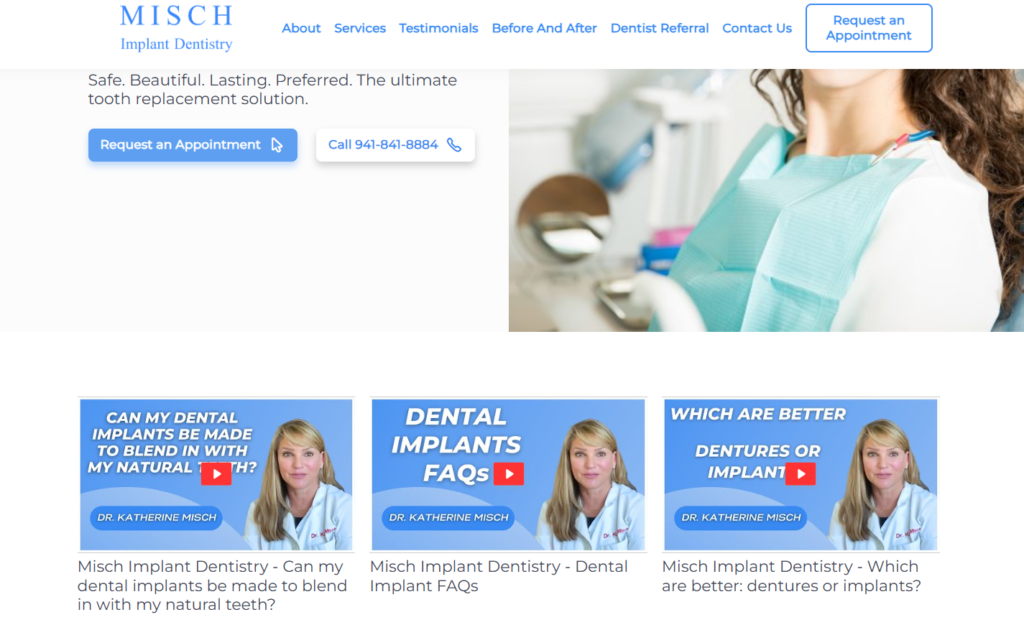
It’s the same for patients considering higher-cost dental procedures like Invisalign or dental implants. They want more than just star ratings; they’re looking for stories, proof, and authenticity. That’s where patient testimonial videos come in.

These videos act as one of the best dental marketing ideas to grow your practice. Instead of you telling people how great your care is, your patients do it for you.

A video testimonial is essentially video marketing tailored for dentistry. It builds trust, educates, and provides the kind of social proof that can dramatically increase new patients.

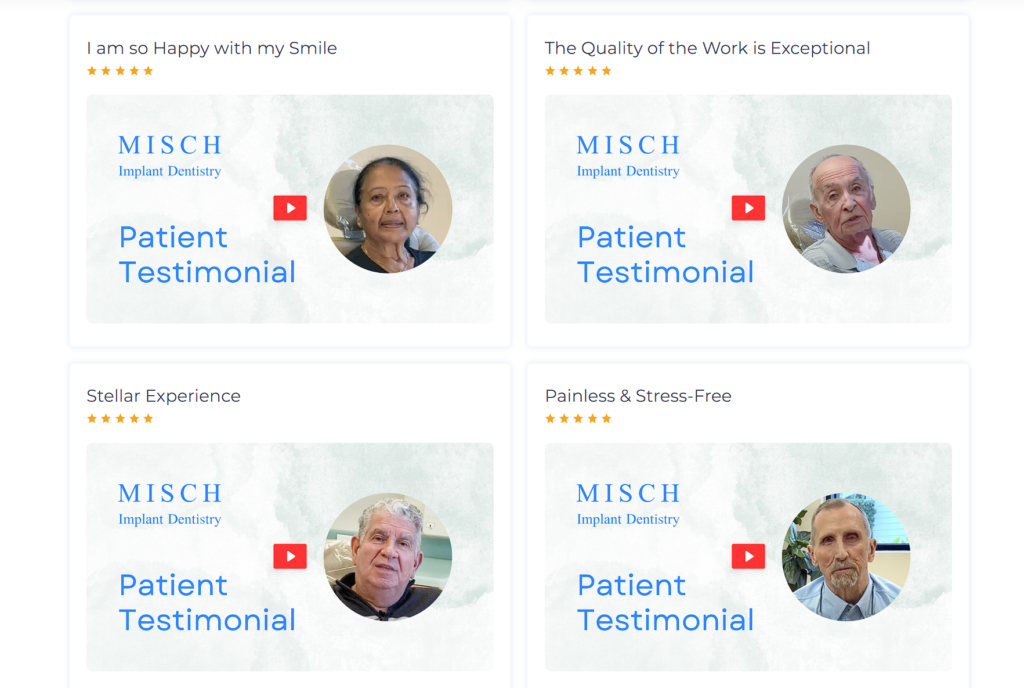
Imagine you’re searching for dental implants for your mom. You check a dozen practices online, every dental website looks polished, every dentist lists impressive credentials, and everyone claims to have the “latest technology.” After a while, they all start to sound the same.

Then you come across a practice that does something different: instead of more promises, you see a real patient on video, sharing their experience in their own words:

MISCH Patient Testimonial

That’s the difference between reading promises and hearing the truth from an actual patient.

It’s not the only one either; there are dozens of videos of happy patients willing to go on camera and share their positive experiences. With one video, you might be skeptical, thinking it could be a paid actor or a family friend. But it’s hard to deny a wall filled with faces of genuinely happy patients singing the praises of the dentist.
Misch Testimonials

👀 See an Example from Our Clients

This doesn’t require Hollywood production either. Many practices simply record short testimonials with a smartphone and then share them on their dental social media channels or embed them on their dental website. The key is authenticity. People connect with other people, not marketing jargon.

Patient testimonial videos work wonders for more than just cosmetic procedures. Imagine you’re a parent looking for a new dentist for your child. Many practices claim to be great with kids, but what if one of the practices you’re checking out has videos like this?

Dundas Patient Testimonial

Who are you going to trust? The practices that love to sing their own praises, or the ones that have their patients sing their praises for them?

Patient testimonial videos provide compelling, authentic social proof that can greatly influence potential patients’ decisions and enhance your dental practice marketing efforts. By showcasing real patients sharing their positive experiences, you build trust and credibility that sets your practice apart.

How Do You Get Patient Testimonial Videos?

Just like with Google reviews, many practices over complicate the process of gathering patient testimonials. The simplest and most effective method is to have your staff ask patients directly.

Ask Patients Personally

The process begins with your staff asking patients at the end of their appointment while they are being checked out at the front desk. Your staff should ask about their experience, and if it’s positive (which it usually is), that’s your moment to say:

“We’re so glad you had a great visit. Would you mind sharing your experience in a short video testimonial? It only takes a minute, and it would help other patients who are looking for a dentist.”

Not everyone will feel comfortable doing a video, and that’s okay. Some patients may feel uncomfortable on video. In that case, ask if they’d be open to leaving a Google review instead. This two-step approach works because it boosts the chances of capturing some form of feedback. Even 1–2 video testimonials for every 10 patients you ask can make a huge difference for your dental business.

Pro Tip: If someone is hesitant, show them a few examples of videos already featured on your dental website. You can also offer to send the final cut for approval before posting, which often reassures patients.

Keep It Simple: Use Your Phone

Patient Testimonial Recording

If the patient agrees, simply use your phone to record. Ask them, “How was your experience today at ABC Dental?” and let them speak.

While not all testimonials will be perfect, the goal is to show authenticity and genuine patient satisfaction. If the patient is particularly chatty and comfortable, ask more questions like:

  • “What made you decide to get dental implants?”
  • “How do you feel after completing your Invisalign treatment?”
  • “Would you recommend this treatment to other potential patients facing similar issues?”

Choose a quiet, well-lit spot in your office and hit record. These authentic stories are often far more persuasive than scripted ads or brochures.

Don’t overthink the editing process. A testimonial’s power lies in its honesty. If needed, trim the beginning or end of the video to make it clean, but keep the natural feel. Free editing tools on Windows and Mac work fine, or you can hire a freelancer on Upwork for a few dollars.

The goal isn’t to create a  commercial, it’s to help your dental practice stand out with real patient voices. A handful of genuine testimonials can set you apart from other dental practices listed in your area.

Here are some great examples of testimonial videos our clients have created that you can use for inspiration:

  • Guelph Family Dentistry
  • Misch Implant Dentistry
  • Royal Crest Dentistry

How Winning Local Awards Helps Dentists Stand Out

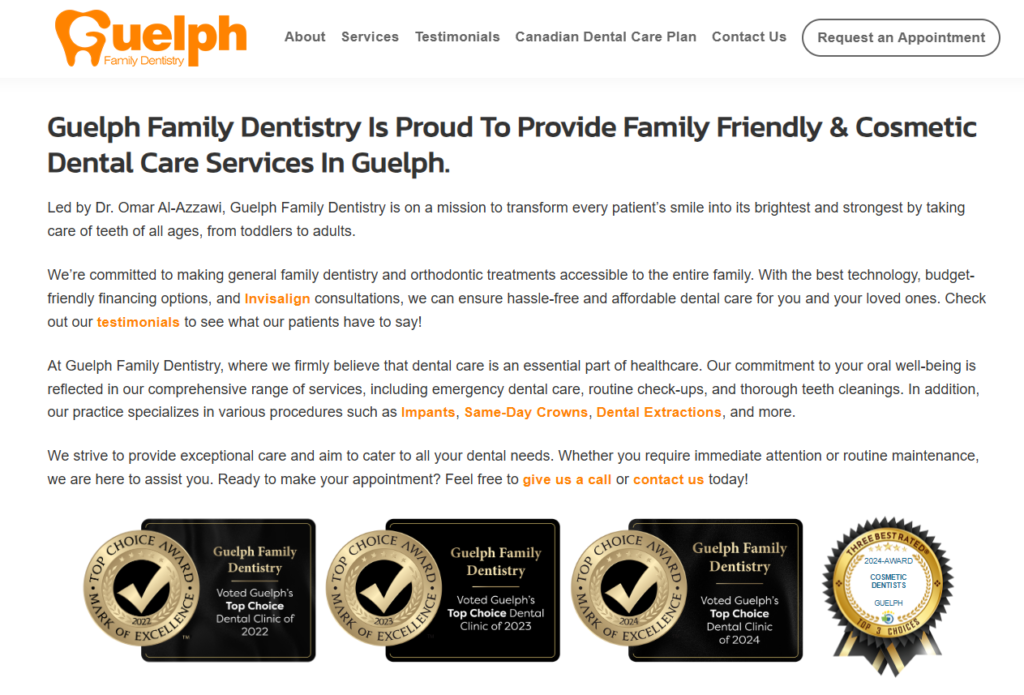
Another excellent digital dental marketing strategy to increase your social proof and make your practice stand out from dozens of other offices in the area is by proudly showcasing local awards.

These badges are eye-catching, easy to understand, and instantly signal to potential patients that your office is not just another option, but an exceptional one.

Guelph Awards

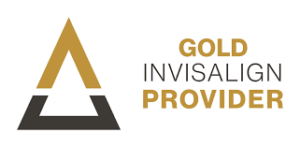
Think of it this way: many dental practices offer Invisalign, but if your modern dental website highlights a “Gold Invisalign Provider” badge, your credibility skyrockets. It’s the difference between someone saying, “I do gymnastics” versus “I won a gold medal in gymnastics.”

Dental Practice Marketing - Gold Invisalign Provider

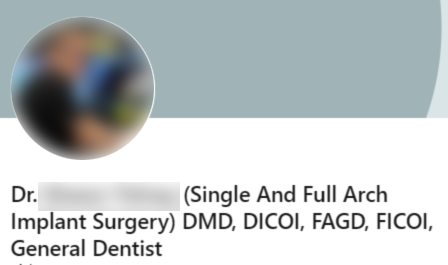
The reality is, most patients searching for a dentist aren’t doctors. They can’t evaluate your clinical skills, and they aren’t impressed by long bios packed with designations or academic credentials. For 99% of patients, those letters after your name don’t mean much.

Profile image of a person blurred, with a header showing text: “Dr. [Name] (Single And Full Arch Implant Surgery) DMD, DICOI, FAGD, FICOI, General Dentist.”

But an award badge? That’s something everyone understands. Recognition from a trusted company or local publication (like a Reader’s Choice Award) is a simple yet powerful way to boost your marketing, promote your dental practice, and attract more patients.

As part of your dental digital marketing strategy, adding awards and recognitions to your dental website and even sharing them in social posts can be an effective way to:

  • Set your practice apart from competitors

  • Reassure patients who are looking for a dentist they can trust

  • Support other marketing efforts like email campaigns and offline marketing

This isn’t just decoration for your website, it’s a proven successful dental marketing tactic that can help your dental practice build authority and credibility fast.

How Do You Win Local Awards?

If you’ve built trust with your patients, leverage that relationship. Send out an email, post on your dental website, or run a small content marketing campaign asking for support. Nearly every community has local award programs, and patients are often eager to vote for a practice they already know and love.

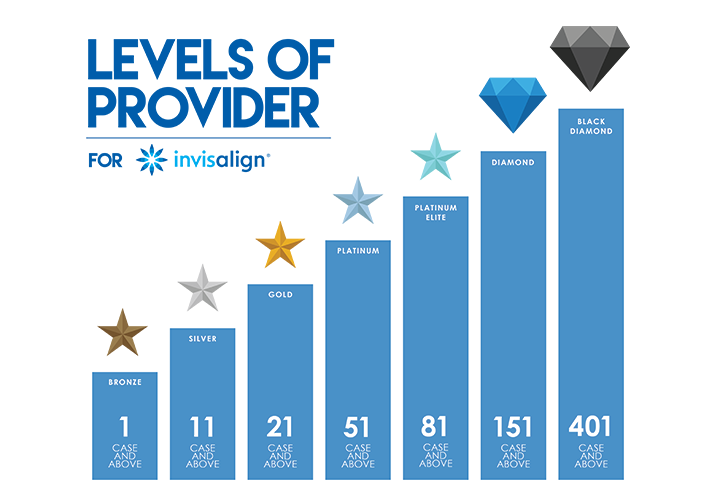
Beyond local contests, online awards like Three Best Rated or industry-specific programs such as Invisalign’s provider badges can make your office stand out.

 Patients don’t understand the technical details — but even displaying a Bronze or Silver badge on your dental website design can boost confidence and help your dental practice attract new patients.

👀 See an Example from Our Clients

Levels of Invisalign provider.

Like Google reviews and patient testimonial videos, winning awards comes down to organizing your staff to ask for your patients’ support. If you rely only on a generic email blast or social post, you won’t see the same level of enthusiasm as when you and your team personally ask during a dental visit. That personal touch is often what helps dental practices attract far more votes.

Winning these awards takes more effort than getting a Google review or a patient testimonial video, but it can have a significantly larger and more long-term impact on your practice’s ability to attract patients.

By investing the time and effort to win these awards, you not only enhance your practice’s reputation but also build a strong foundation for sustained growth and success through effective dental marketing for dental offices.

How Educational Videos Strengthen Your Dental Marketing

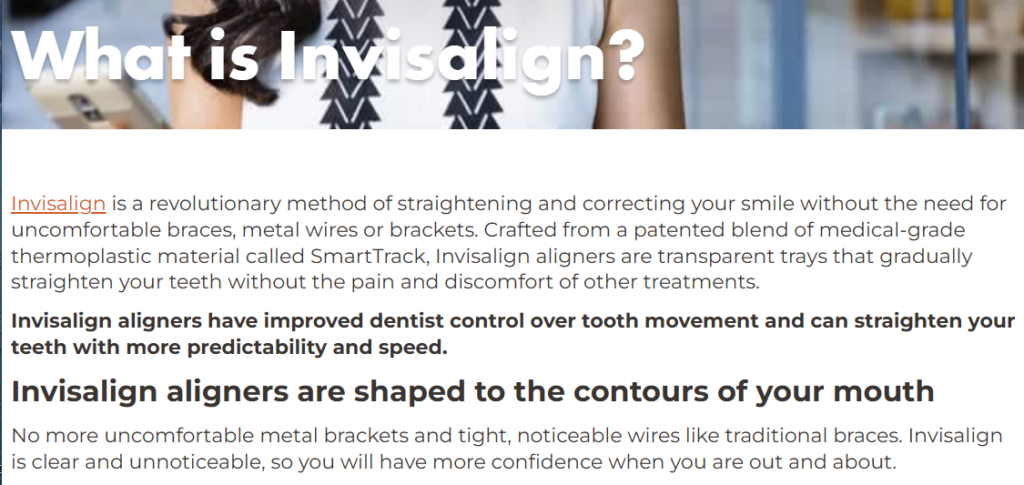
When a patient searches for services like Invisalign or dental implants, they often find dozens of dental practice websites offering the same treatments. Typically, these websites provide a short explanation of the service and a phone number to call for more information.

Pretty standard and pretty boring.
Dental Practice Marketing - Bad Landing Page - Invisalign

What many dental practices need to understand is that people aren’t visiting your site just to confirm whether you offer Invisalign. What they’re really asking is:

“Why should I choose your practice over the dozen other dentists also offering Invisalign?”

Most websites fail to provide compelling reasons. Google reviews and patient testimonial videos are both powerful parts of a dental marketing campaign, but there’s another highly effective tool: educational videos.

Twenty years ago, people flipped through the Yellow Pages to search for dental practices, read an ad, and call the number for more details. Today, patients want as much information as possible before they ever pick up the phone.

Hearing, “Sorry, we don’t give prices over the phone. You need to come in for a consultation” is now a major turn-off. Consumer behavior has shifted, and so have expectations.

As part of your marketing plan, educational videos give you a chance to answer the questions that matter most to patients—about cost, comfort, recovery, and results.

Practices that adapt this approach can increase dental patient trust, boost conversions, and set themselves apart from competitors. Instead of forcing people into a consultation, you’re giving them real value up front with content that works as both education and a tool to attract new patients.

Misch FAQ Image

How Do You Create Educational Videos?

These videos are quick and easy to make, often requiring just a smartphone. Like testimonial videos, the goal isn’t high-end production but genuine, authentic content that patients can trust.

Think about the questions you and your staff answer every single day. Those same questions can easily be turned into short, informative videos.

For example, consider this video:

MISCH Dentures VS Implants

👀 See an Example from Our Clients

You might create one explaining the process of a dental implant from start to finish or another that walks patients through what Invisalign treatment looks like.

These videos provide real value to people actively searching for dental practices and considering treatment. They also allow patients to virtually “meet” the dentist and team, forming a connection before they ever step into the office.

Now, imagine you’re a patient considering a major cosmetic procedure. Which practice would you call: the one whose website just lists “we do dental implants” and asks you to phone in for details, or the one with helpful videos breaking down costs, recovery time, and what to expect?

Educational videos showcase the human side of the dental care and position your office as the authority in your area.

Here are some common patient questions that make great topics:

  • What does X typically cost?
  • What will affect the price of the procedure?
  • What happens if they don’t address this problem?
  • Does X procedure hurt?
  • Do they have to take time off work?
  • How does X procedure compare to Y? (e.g., dental implants vs. dentures)
  • How long does X treatment last?
  • What causes X problem?
  • What are the typical treatment options to fix X?

If you work in a dental office, a big part of your day is answering these exact questions. You already know the content, this is just about delivering it in a new way.

Keep a notepad at the front desk and jot down repeat questions from patients. That list will quickly grow into a library of dental health tips and practical advice you can use to create dozens of helpful videos.

Tips for Shooting Educational Videos

Just like with patient testimonial videos, you don’t need a fancy camera, expensive lighting, or a professional video editor. Here’s how to do it:

  1. Use Your Phone: Your smartphone camera is good enough.
  2. Shoot in a Well-Lit and Quiet Room: Ensure the area is quiet and well-lit. Avoid backlighting, like shooting with a bright window behind the subject.
  3. Simple Editing: Use free editing software that comes pre-installed on most computers to trim the beginning or end of the video if needed. If you’re not tech-savvy, hire a video editor on Fiverr for a small fee to polish the footage.
  4. Focus on Content: The goal is to make the video genuinely helpful and informative, not to create a highly polished commercial.

By answering common patient questions in a clear and authentic way, you give people the information they need to feel confident and at ease. This not only highlights your expertise but also builds trust and shows that your practice is approachable and genuinely cares about helping patients.

Over time, these simple videos can increase your dental practice’s visibility online, build trust with your community, and make your practice stand out from other dental practices looking to attract patients.

Grow Faster with Authentic, Trust-Building Social Media

Social media is one of the easiest ways for dental practices to connect with people. Unlike paid ads, which are mainly about getting quick leads, organic posts are about building trust, showing your personality, and staying connected with your community.

By sharing real, authentic content on a regular basis, you can keep your practice top of mind, show patients who you are, and attract new people without spending a big budget on advertising.

The key is to post content that feels natural and relatable. Celebrate patient wins, share quick dental tips, or show behind-the-scenes moments with your team. These kinds of posts are simple to create, but they can make a big difference in how people see and connect with your practice.

Common Mistakes with Social Media Posts

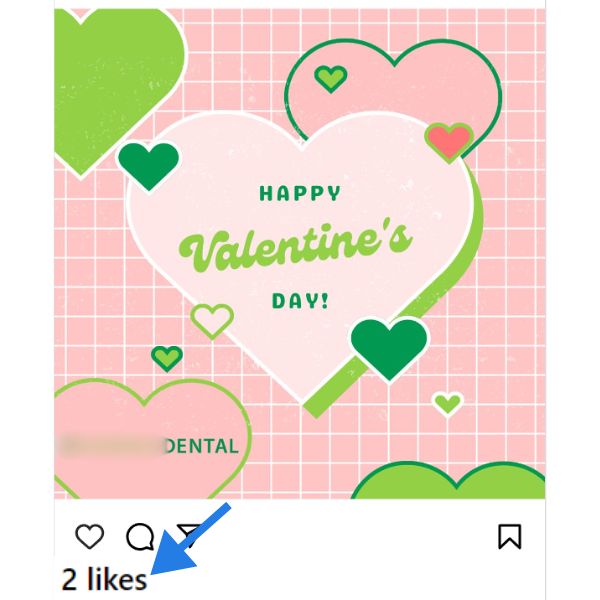
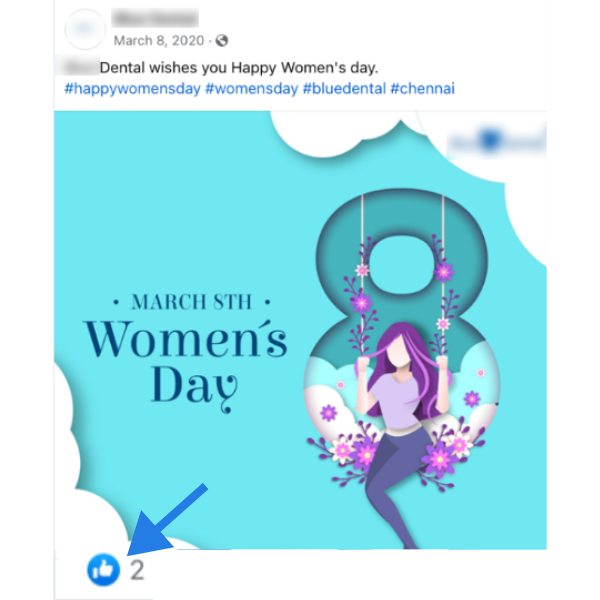
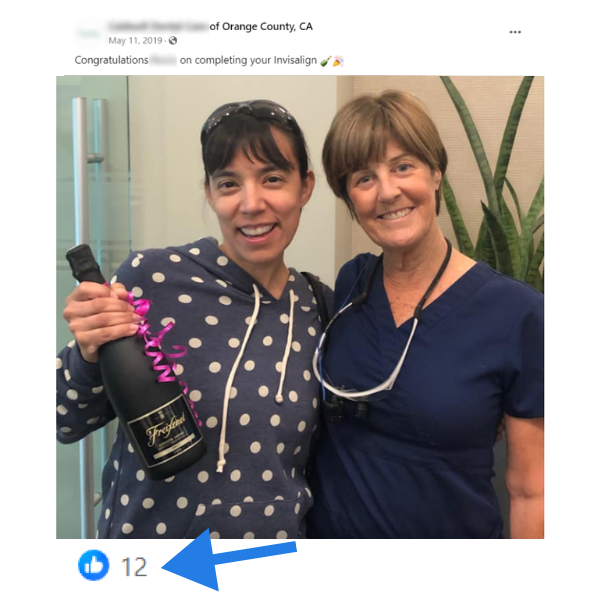
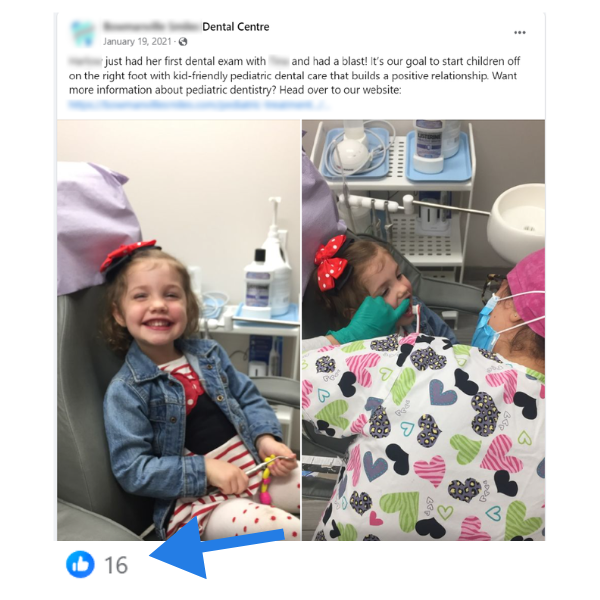
A big reason dental practices struggle with social media is because their content feels bland or generic. Too many offices rely on stock photos with dull captions or pushy sales messages. The result? Posts that no one pays attention to.

Social Posts 1
Social Posts 2

Here’s the truth: social media platforms reward engagement. If your posts spark likes, comments, shares, or conversations, the algorithm shows them to more people. But if your content feels boring or inauthentic, fewer people will see it, and your efforts won’t pay off.

Social Posts 3
Social Posts 4

Social Media Posts That Really Work for Dental Practices

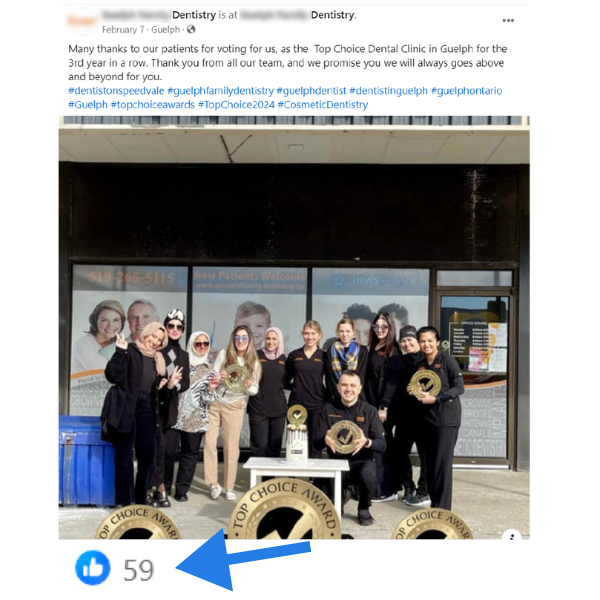
To get engagement, views, clicks, and ultimately patients, you need to post authentic and engaging content featuring your staff and patients.

Here are some examples of what works:

  • Staff Celebrations: Share photos of your staff celebrating birthdays, winning awards, or participating in fundraisers.
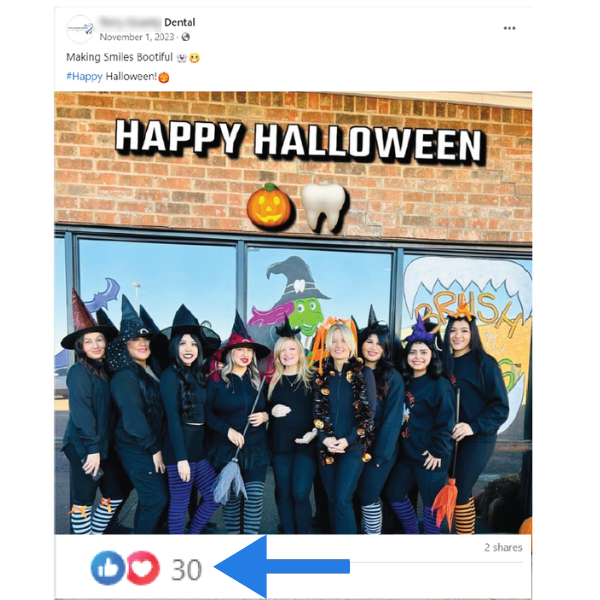
Staff Celebration 1
Staff Celebration 2
  • Patient Experiences: Post pictures of happy patients, whether they’re coming in for their first appointment or enjoying their visit to your office.
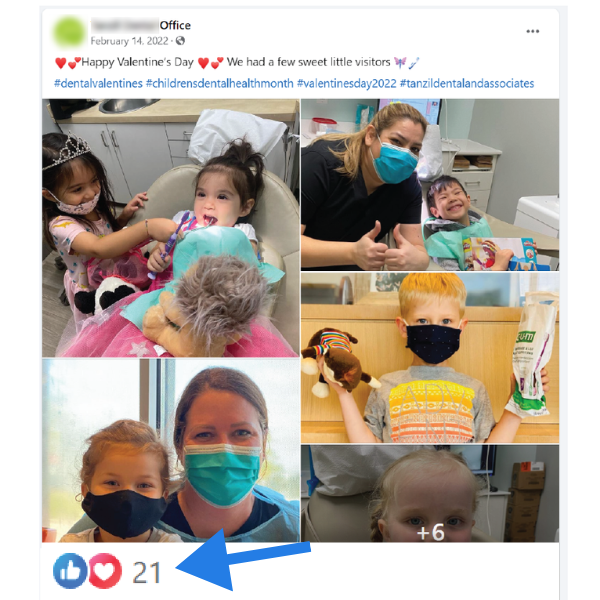
Patient Experience 1
Patient Experience 3
Patient Experience 2
Patient Experience 4
Social media guide white

If you want examples on highly effective social media ideas that will get clicks, engagement, and new patients in the door, check out our free 2025 Social Media Strategies To Drive New Patients guide with over 100 pages for post ideas you can replicate in your practice.

Download the Guide

How to Manage Your Social Media Accounts

Dentists are busy. With patients, staff, and the day-to-day of running a practice, managing social media usually feels like a headache. That’s why one of the best things you can do is delegate this task to someone on your team.

A smart approach is to have that person block out one or two hours each week to prepare and schedule all the posts in advance. Otherwise, life in the practice gets in the way, and social media gets forgotten.

A good tool to make this process easier is SocialBee. With SocialBee, your team can write posts ahead of time, schedule them, and let the platform automatically publish them on all your social media accounts. This saves time and ensures your practice always has fresh, engaging content going out consistently.

Local Dental SEO: Rank Higher on Google, Attract More Patients

You could be the best dentist in your city — but if your practice doesn’t show up when someone searches “dentist near me,” it won’t matter. Visibility is everything, and that’s where local dental SEO makes the difference.

Every day, patients are turning to Google to find nearby clinics. The ones that appear in the Local Map Pack — those top three listings with a map — capture over 70% of all clicks. If your office isn’t showing up there, most patients will never even know your dental services exist.

Local SEO ensures your practice appears exactly where patients are looking. When someone nearby searches “dental implants [your city]” or “emergency dentist near me,” Google decides which clinics to display based on proximity, reputation, and trust signals like reviews and online consistency.

That means your Google Business Profile, patient reviews, and local backlinks now play a bigger role than ever. Together, they tell Google that your clinic is active, trusted, and relevant to local patients — which translates directly into more calls, more appointments, and more growth.

Unlike paid ads, Local SEO builds a foundation that keeps working even when you stop spending. Once your practice ranks at the top of local search results, that visibility compounds month after month, driving long-term patient flow at a fraction of the cost of ads.

How to Start Dominating Local Dental SEO

Google considers hundreds of factors when ranking websites, which can be overwhelming if you’re not familiar with SEO. Terms like keywords, domain authority, backlinks, and schema markup may sound like gibberish, which is why many dentists buy dental SEO services.

However, improving your dental website’s rankings isn’t as complicated as many marketing companies make it seem. Many tasks can be done by you and your team. Unless you’re in a highly competitive city with hundreds of dental practices, you can achieve substantial improvements on your own and outperform most other offices in your area.

Want to see how to implement all of this step-by-step?

Check out our full guide below — it breaks down everything from Google Business optimization to ranking in the Map Pack and outranking your local competitors.

Local SEO for Dentists

Related Article

Local SEO for Dentists →

Learn how to rank higher on Google Maps, attract ready-to-book patients, and dominate local searches in your city.

We also put together a YouTube series on Dental SEO where we explain the fundamentals in plain English. It’s perfect if you prefer to learn by watching, and it’ll give you the confidence to either start marketing your practice in-house or know exactly what to expect when hiring a company.

Win the Dental Marketing Game in 2025

The reality is simple: dental marketing has changed, but most practices haven’t. The clinics that thrive today are the ones that focus on trust, proof, and real connection — not gimmicks or endless ad spending.

Google reviews, testimonial videos, local SEO, and authentic social media aren’t just “nice extras” anymore — they’re the foundation of growth in 2025.

Start implementing even one or two of these strategies consistently and you’ll see a difference. Do all of them, and your competitors won’t stand a chance.

Because in today’s digital world, the most trusted practice — not the cheapest or flashiest — wins every time.

Dental Marketing Calendar

Still Seeing Gaps in Your Schedule? Let’s Change That.

Discover how the top dental practices keep their chairs full all year. We’ll show you the exact strategies that drive consistent new patient flow — without wasting money on ads that don’t convert.

Book a Free Demo
  • Page 1
  • Page 2
  • Go to Next Page »

Primary Sidebar

Footer

RevUp Dental

About RevUp

RevUp Dental helps dental practices attract more patients with high-converting dental websites, targeted Google Ads, and effective dental SEO strategies. Our software tracks your calls and reveals where and why your practice is losing patients. With these insights, we train your front desk team to confidently book more patients.

  • tiktok Icon

Contact Us

Want to know more about what we can do for you and your practice? Reach out to us. We’d love to have a one-on-one conversation with you to see if we’re the best fit for your needs.

  • 1-866-530-2544
  • info@revupdental.com
  • 33 Main St W, Grimsby, ON L3M 1R3, Canada
RevUp Dental © 2025 Rights Reserved | Privacy Policy